
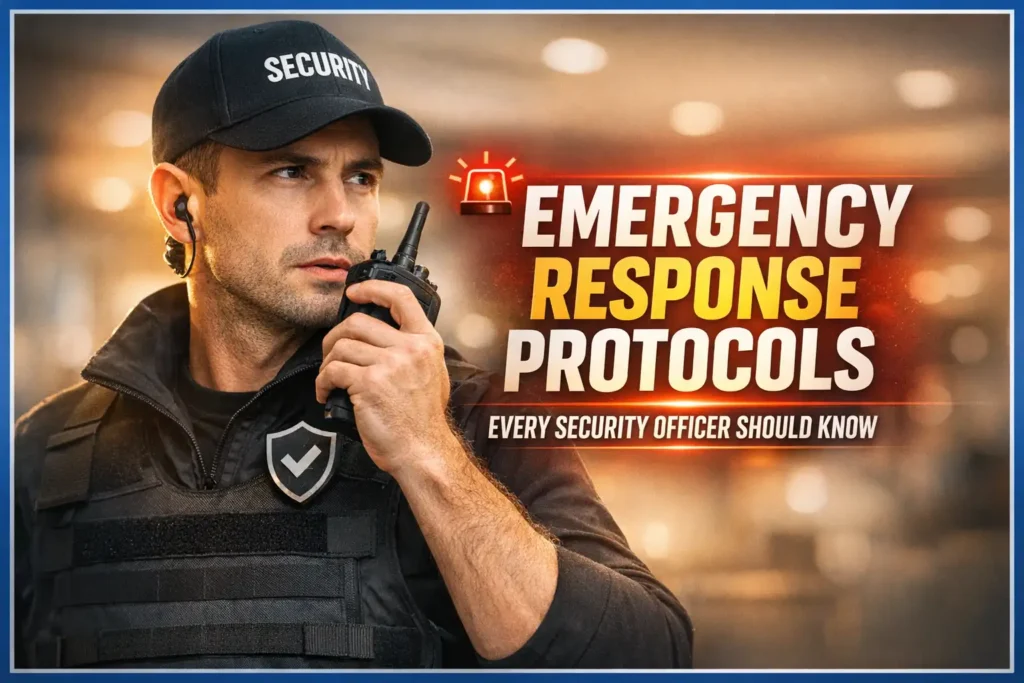
The emergency response protocols are premeditated and developed measures that are put in place to provide safety to people and property in the event of an emergency. Adherence to these guidelines allows the security officers to manage the situation in a proper way.
The security officers have emergency response protocols that are founded on a timely evaluation and control of the site. It also involves site securing, evacuation, first aid and documentation of the incidents. As a security officer, you need to know these procedures in case of a security emergency.
What are Emergency Response Protocols?
The security officers are trained on a set of pre-built procedures that are known as the emergency response protocols. Highly trained armed security guards often act as first responders in emergencies, and such crisis situations require them to have specialized training. Below are the major rules that should be adhered to by security personnel in case of an emergency.
- Prevention
- Communication
- Access Control
- Evacuation
- First Aid
- Event Recording
Let’s discuss them one by one in detail:
Prevention
One of the primary things a well-coordinated emergency response can offer is prevention of a possible disaster in the first place. As a security official, you should be very keen on observation. Attempt to avoid the occurrence of any incident by being careful and attentive at all times. You can do this by being very keen on any hazard or any threat you see and reporting the matter to your line of command. Your observance and careful monitoring are crucial in ensuring that an emergency does not occur.
Communication
Communication is the key. Effective communication can rescue you and other people during disasters, whether you are dealing with an emergency or you are witnessing a danger. Always inform your response team and consult them in order to get guidance and support to verify the state of emergency. After this, when the emergency situation has been established, then you can act in line with the established protocols. As much as you are communicating with the response team, continue to document the incident so that it can be recorded.
Access Control
One of the important aspects of your emergency response to the incident is access control. In case of an emergency, it is your duty to alleviate the situation at the moment. Access control protocol minimizes the damage and prevents trespassers and unauthorized access to the site. The access control will require the use of shutters and the use of barriers as a way of limiting the entry or exit.
Evacuation
All security personnel should be familiar with where the evacuation points are. The knowledge of the evacuation routes will allow the security officers to direct individuals to evacuate safely. As an example, during a fire, you are supposed to know how to evacuate the people and how to direct them to a safe direction.
First Aid
One of the least talked about aspects of security guard duties is being prepared to provide emergency first aid treatment when required. CPR-certified security officers can save lives in case of fire because they will offer first aid and CPR to the people before the professional medical team reaches the emergency scene. Their presence on the site is not only a source of reassurance to the people around, but it can actually help save lives in emergency medical situations.
Event Recording
Note down everything, either in an emergency or in a normal situation. As a security officer, make it a habit to take notes on all the happenings and put timestamps on them. Documentation of the events will assist in the internal evaluation, legal practice, and contribute to the training enhancement in the future.
Different Types of Emergencies
As a security guard, you must be ready at all times and always be prepared in case of an emergency. Some of the situations you can find yourself in are ones that confront fire, a medical emergency or a security threat. Being alert and prepared would assist you in fighting such situations. The security officers are significant in managing the emergencies in that they are the first people to respond when the time comes. The emergencies that security guards often encounter are:
- Medical emergencies
- Incidents with fire and hazardous materials
- Security threats & crimes
- Natural disasters
- Public disturbances & safety
In case of a medical emergency, the security will aid the medical staff to do first aid and CPR. In case of an accident involving fire or other dangerous materials, a security officer may apply a fire extinguisher or an alarm to help the safety team prepare to evacuate. Security personnel will also be helpful in law enforcement in several cases.
Conclusion
Emergency response procedures are preset mechanisms that help the security officers to respond based on the situation. And as a guard or a security officer, you have to follow these guidelines. The knowledge about these procedures is an essential component of the work of a security guard.
Steel Bison Security LLC has a team of licensed security personnel who are well-trained to deliver a rapid emergency response in any situation. We ensure foolproof security for both residential and commercial premises in Washington, including armed security services. Contact us today to discuss your security needs and let us tailor a plan to your specific requirements.
FAQs
What are the emergency response procedures of security officers?
Pre-determined procedures of emergency response are those that guarantee the safety of individuals and objects. The major emergency protocols are:
1) Prevention
2) Communication
3) Access Control
4) Evacuation
5) First Aid
6) Event Recording
What are the common emergency types?
The types of emergencies that need a response protocol include medical emergencies, fire and hazardous material incidents, security threats and crimes, natural disasters, etc.
How does a security officer respond to an emergency?
A comprehensive security guard training regarding emergencies includes evaluating the situation, notifying the response team, providing first aid, and safely evacuating the premises.